Teams leave WordPress for security risk, plugin bloat, slow sites, and awkward fits with Next.js, Nuxt, or Astro. The right alternative depends on whether you need publishing, a content API, or many client projects on one install.
Why leave WordPress?
- Security - Popularity makes WordPress a constant target. Plugin holes appear often.
- Performance - Simple sites can feel slow without heavy caching and cleanup.
- Plugin dependency - Core jobs often need plugins, each with update and risk cost.
- Database bloat - Revisions, transients, and plugin data pile up over years.
- Modern frontends - React and Vue stacks need awkward bridges to classic WordPress themes.
- Maintenance - Core, themes, and plugins need constant attention across many sites.
What to consider
- Content type - Blog posts only, or structured content for apps?
- Frontend - Do you need Next.js, Nuxt, Astro, or a classic site?
- Editors - How technical are the people who write content?
- Hosting - Self-hosted control, or managed cloud?
- Budget - One-time license, subscription, or open source plus ops time?
- Scale of sites - One project, or many clients on one CMS?
1. ElmapiCMS

ElmapiCMS is a self-hosted headless CMS on Laravel 13 and React. It needs PHP 8.4+. Content lives in the CMS. Frontends consume a REST Content API. Next.js, Nuxt, Astro, and mobile apps fit naturally.
The standout feature for agencies is multi-project support. One install handles unlimited projects, each with isolated content and API keys. That is simpler than WordPress Multisite for many separate client frontends.
What ships in 4.0
- Draft and publish, content versioning, and locales
- Asset library with WebP images, crop tools, and optional S3 direct upload
- Built-in AI tools and an official MCP server for Cursor and Claude Code
- Authentication for frontend (signup, sign-in, refresh)
- Frontend templates for Next.js, Nuxt, and Astro
- Webhooks, JS SDK, and project API tokens
Advantages over WordPress
- API-first - Built for modern frameworks, not theme PHP templates.
- Multi-project - One install, unlimited isolated projects.
- Smaller attack surface - No giant plugin marketplace as the default path.
- Predictable cost - $74 once versus ongoing plugin and maintenance stack costs.
Pricing: $74 one-time payment. See pricing · Live demo
Best for: Agencies with many clients, API-first apps, teams that want cleaner architecture than WordPress.
2. NomaCMS
NomaCMS is a managed, AI-native headless CMS. You get structured content, a REST API, a JavaScript SDK, and AI for writing, translation, and editing. Ship to Next.js, Nuxt, Astro, or other stacks without running your own CMS server. Connect Cursor, Claude Code, or other MCP-compatible tools with the Noma MCP server.
Why consider NomaCMS
- Managed cloud with global CDN for assets and no server ops on your side
- AI assistant, inline field actions, and one-click entry translation
- REST API and SDK with predictable shapes for frontends and automation
- MCP server for AI editors (
npx -y @nomacms/mcp-server) - Project auth, webhooks, locales, and team workspaces on paid plans
Pricing: Plans start at $15 per month after a 7-day free trial. See nomacms.com · Start free trial
Best for: Teams that want a hosted CMS with AI-first workflows and delivery infrastructure included, not a self-hosted install.
3. Ghost
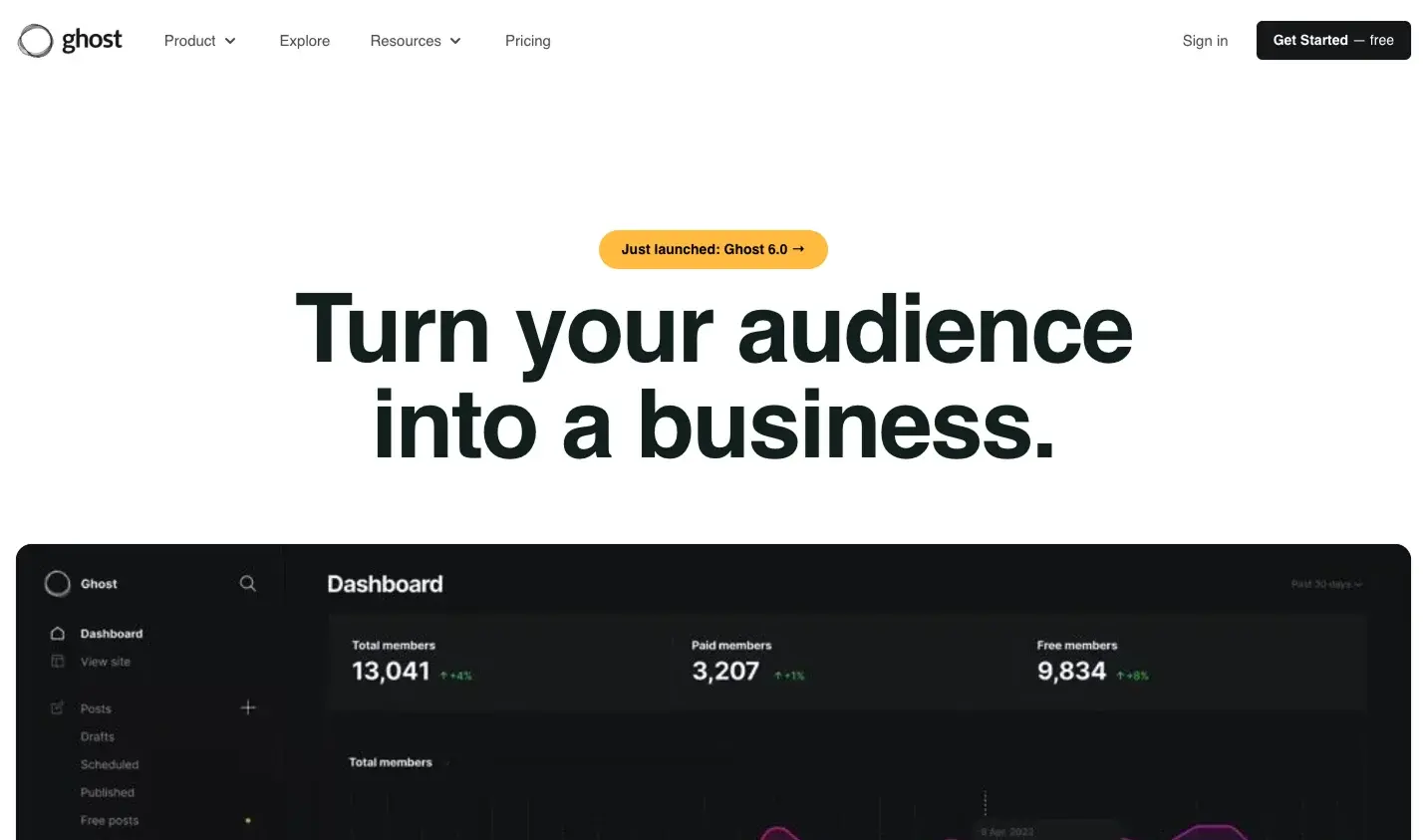
Ghost is the most direct WordPress alternative for bloggers and publishers. It focuses on writing, memberships, newsletters, and SEO without a large plugin stack.
Pricing: Self-hosted is free. Ghost Pro starts around $9/month. Best for: Blogs, newsletters, and membership publishing.
4. Strapi
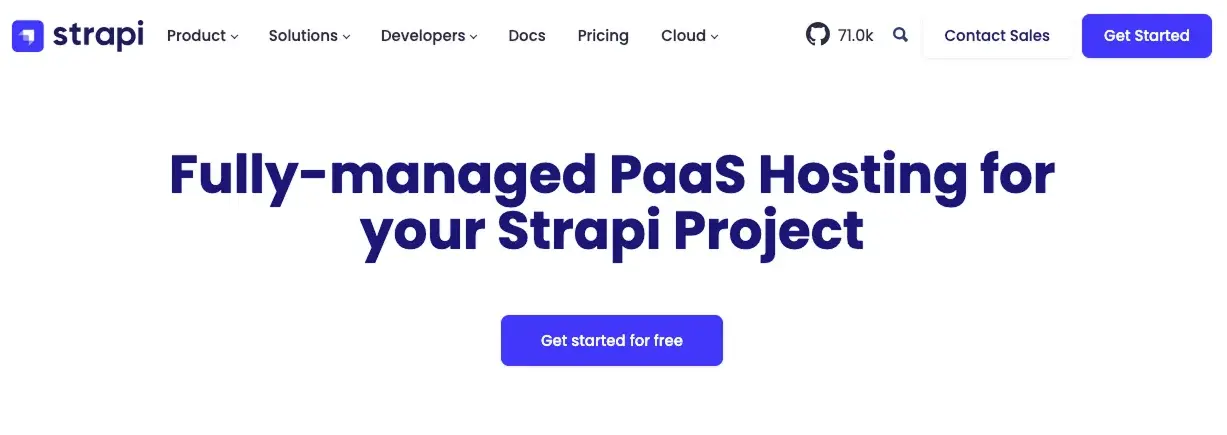
Strapi is a popular open-source headless CMS on Node.js. It is self-hosted and extensible. Unlike WordPress, it is designed for modern frontends with REST and GraphQL.
Plan for RAM. Strapi often wants 1GB or more, and each project usually needs its own install.
Pricing: Free (MIT). Cloud options exist. Best for: Node teams building custom frontends.
5. Statamic
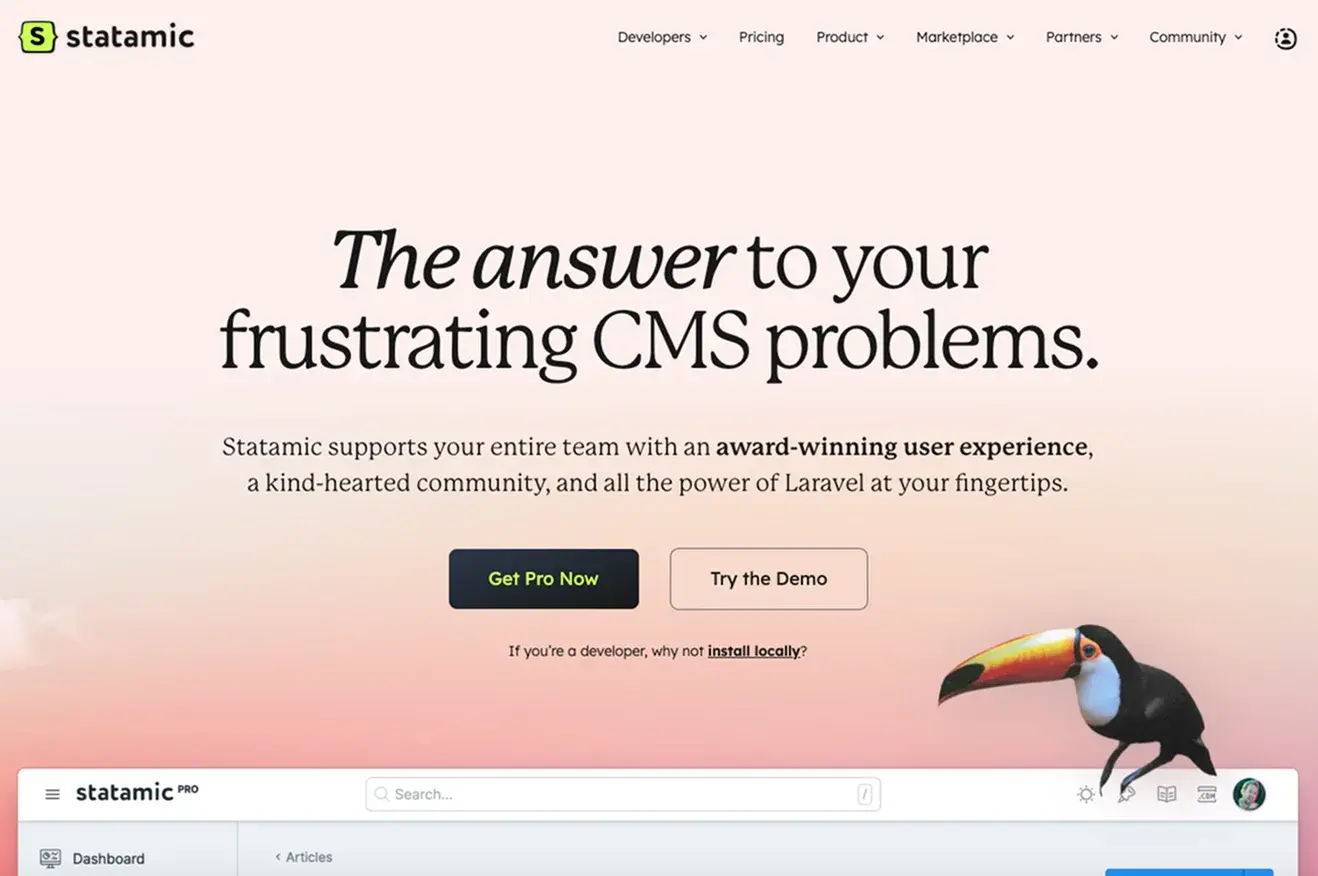
Statamic is a traditional Laravel CMS with a strong control panel. Content can live in flat files or a database. Flat files make Git workflows easy. Headless mode can expose REST or GraphQL.
Pricing: Free for solo sites. Pro is about $275 per site. Best for: Teams that want a premium WordPress-like editorial feel on modern Laravel.
6. Payload CMS

Payload is a TypeScript-native headless CMS. You define collections in code. That is the opposite of WordPress GUI-first modeling. Type safety and Git-friendly schema are the strengths.
Pricing: Free (MIT). Best for: TypeScript teams with code-first content models.
7. Directus
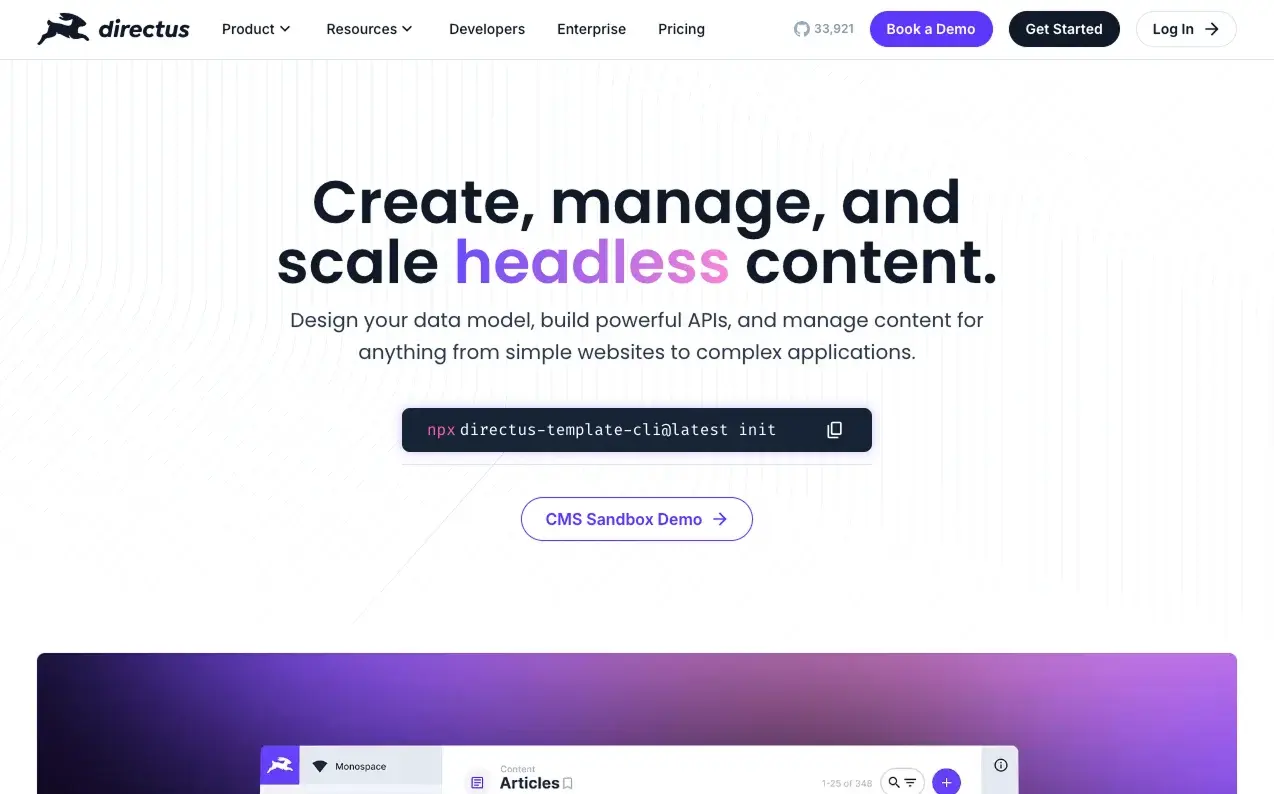
Directus wraps an existing SQL database and exposes admin UI plus REST and GraphQL. Your data stays in normal tables. That helps if you already have a schema or want maximum portability.
Pricing: Free (GPL). Best for: Existing databases and data-portability priorities.
8. Sanity
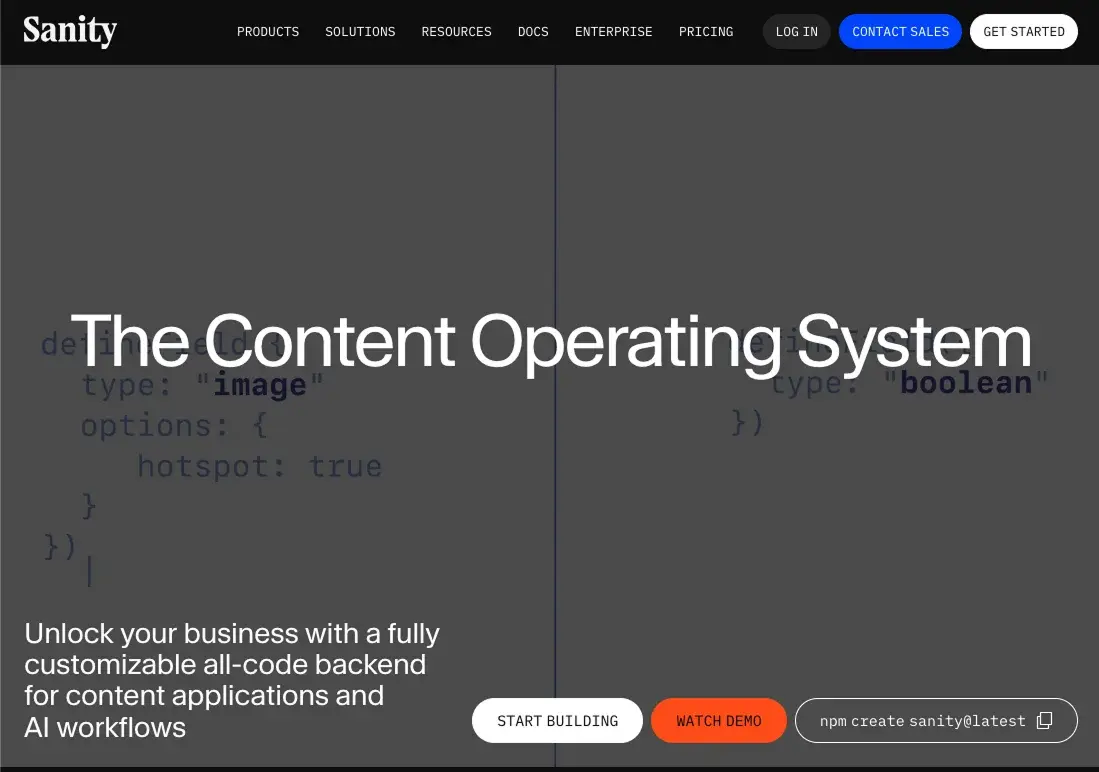
Sanity is a cloud headless CMS focused on editing experience. Real-time collaboration and structured rich text are core strengths. You do not manage the CMS server yourself on the standard product path.
Pricing: Free tier available. Paid plans often start around $15/month per user. Best for: Content teams that want cloud collaboration.
Also consider
Webflow combines CMS and visual design for marketers who want layouts without code. CMS plans are subscription-based.
Comparison table
| Feature | ElmapiCMS | Ghost | Strapi | Statamic | Sanity | WordPress |
|---|---|---|---|---|---|---|
| Type | Headless | Publishing | Headless | Traditional / headless | Headless | Traditional |
| Multi-project | Yes | No | No | Per site | No | Multisite* |
| Self-hosted | Yes | Yes | Yes | Yes | Limited | Yes |
| Pricing | $74 once | Free / Pro | Free (MIT) | ~$275/site Pro | $15+/mo | Free + plugins |
| Best for | Agencies, API apps | Publishers | Node teams | Premium Laravel sites | Editor collab | General / plugins |
* WordPress Multisite exists, but it is complex and often shares more than agencies want between sites.
FAQ
What is the best WordPress alternative in 2026?
It depends on the job. ElmapiCMS fits agencies and API-first apps that want self-hosted multi-project content. NomaCMS fits teams that want a managed, AI-native cloud CMS. Ghost fits blogs and newsletters. Strapi and Payload fit Node or TypeScript teams. Statamic fits premium Laravel editorial sites. Sanity fits cloud collaboration. Webflow fits visual design without code.
What is the best WordPress alternative for agencies?
Agencies that manage many client sites need isolated projects without many WordPress installs. ElmapiCMS runs unlimited projects from one self-hosted install, each with its own content and API keys.
Is there a self-hosted WordPress alternative with a modern API?
Yes. ElmapiCMS, Strapi, Payload, Directus, Ghost, and Statamic can all self-host. ElmapiCMS is API-first on Laravel 13 with a REST Content API for Next.js, Nuxt, and Astro.
WordPress Multisite vs multi-project headless CMS?
WordPress Multisite shares core and often shares database complexity across sites. A multi-project headless CMS like ElmapiCMS keeps projects isolated with separate content and API keys on one install. That is usually simpler for agencies that deliver separate client frontends.
How to choose
- Many client sites, API-first: ElmapiCMS ($74 once, Laravel 13, templates, Authentication).
- Managed AI-native cloud: NomaCMS.
- Blog and newsletter: Ghost.
- Node headless: Strapi.
- Premium Laravel editorial UX: Statamic.
- TypeScript code-first: Payload.
- Existing SQL database: Directus.
- Cloud editor collaboration: Sanity.
- Visual design without code: Webflow.
Next steps: best self-hosted CMS, self-hosted headless CMS, pricing, and live demo.