Whether you're looking for better performance, lower costs, or different features, there are excellent alternatives available. This guide covers 10 headless CMS options that solve different problems Strapi users commonly face. Each has its own strengths—let's find the right one for your use case.
1. NomaCMS
NomaCMS is our managed, AI-native headless CMS. You get structured content, a REST API, a JavaScript SDK, and AI built in for writing, translation, and editing. Ship to Next.js, Nuxt, Astro, or other stacks without running your own CMS server. Connect Cursor, Claude Code, or other MCP-compatible tools using the Noma MCP server. Plans start at $15 per month after a 7-day free trial; see nomacms.com for tiers and limits.
Why consider NomaCMS
- Managed cloud with global CDN for assets and no server ops on your side
- AI assistant, inline field actions, and one-click entry translation
- REST API and SDK with predictable shapes for frontends and automation
- MCP server for AI editors (
npx -y @nomacms/mcp-server) - Project auth, webhooks, locales, and team workspaces on paid plans
Best for
Teams that want a hosted CMS with AI-first workflows and delivery infrastructure included, not only a self-hosted install.
2. ElmapiCMS

ElmapiCMS takes a different approach than most headless CMS platforms. Built on Laravel and React, it focuses on making self-hosting simple and efficient. But what really sets it apart is something most developers discover they need after managing a few client projects: true multi-project support.
Here's the scenario: You're an agency or freelancer with 5 clients. With Strapi, that means 5 separate installations, 5 servers to maintain, 5 sets of updates to manage. With ElmapiCMS, it's one installation managing all 5 projects. Each project is completely isolated with its own collections, API keys, and permissions—but you're only maintaining one system. This isn't just convenient; it dramatically reduces your infrastructure costs and maintenance overhead.
Why Developers Choose ElmapiCMS
- Setup is actually quick – Docker or Laravel Herd gets you running in under 10 minutes, no extensive configuration needed
- You own it – $74 one-time payment, then it's yours forever. No subscriptions creeping up over time
- Manage multiple projects easily – The killer feature for agencies: unlimited projects from one installation
- Performance matters – Laravel's efficient PHP backend means lower memory usage than typical Node.js solutions
- Works internationally – Multi-language support built in, not bolted on
- No black boxes – Full source code access means you can customize anything
What It Costs
$74, paid once. That's it. No "per project" pricing, no "per user" fees, no surprise bills when you scale. For agencies managing 10+ client projects, this pricing model saves thousands compared to per-project alternatives.
Who Should Use It
Perfect for agencies managing multiple clients, freelancers juggling several projects, or development teams who want predictable costs. Also ideal if you're comfortable with Laravel/PHP or simply want a headless CMS that doesn't consume all your server's memory.
3. Payload CMS

If you live and breathe TypeScript, Payload might feel like home. Unlike Strapi's JavaScript foundation, Payload is TypeScript-native from the ground up. Everything from your content models to your custom endpoints is strongly typed.
The "code-first" philosophy means you define your CMS structure in code rather than clicking through an admin panel. This appeals to developers who want version control over their entire CMS configuration, but it does mean a steeper learning curve for less technical team members.
What You Get
- TypeScript everywhere – your IDE will love you for the autocomplete
- Code-first configuration that lives in your Git repo
- Local API access for server-side rendering scenarios
- Both GraphQL and REST endpoints out of the box
Cost
Free and open source. Cloud hosting available if you don't want to self-host.
Good Fit If
You're a TypeScript shop building a single, complex application. Not ideal for agencies managing multiple clients—you'd need separate installations for each, which means more servers and more maintenance than a multi-project solution.
4. Directus
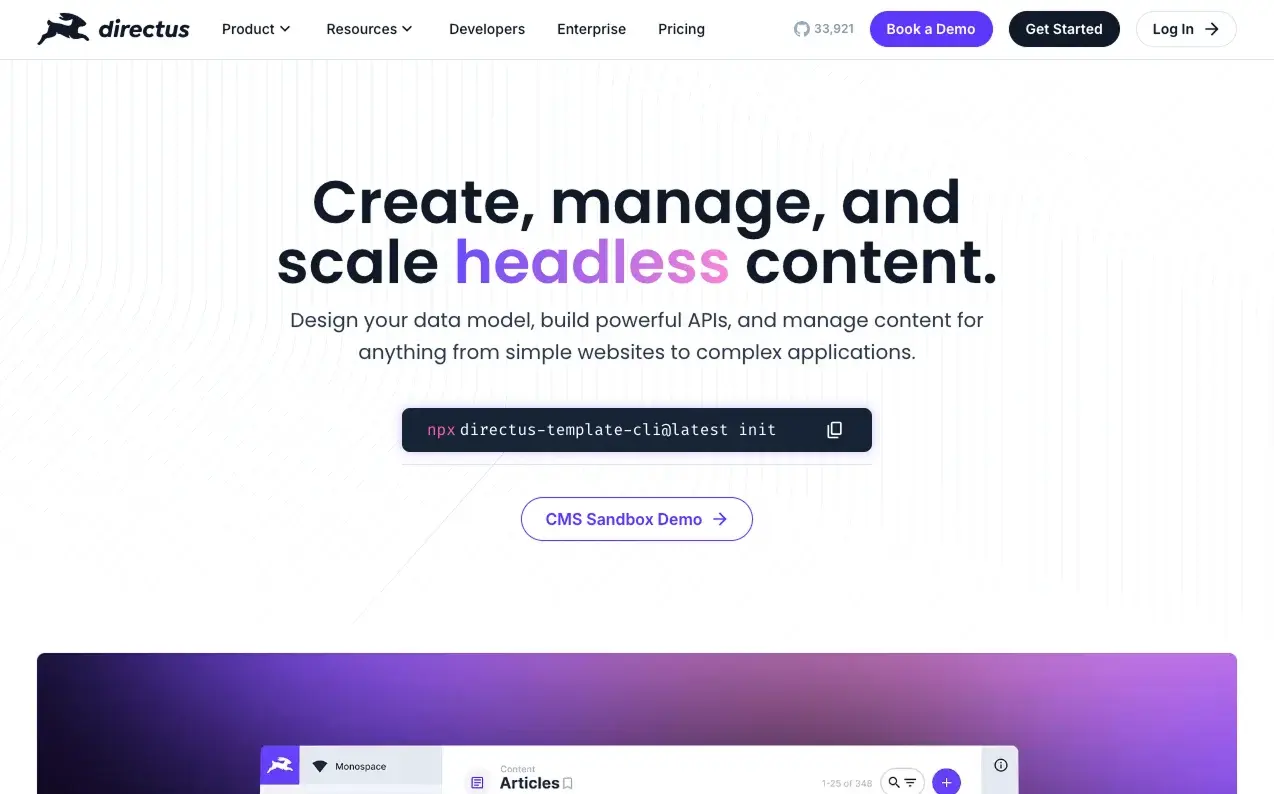
Directus flips the typical CMS approach. Instead of forcing your data into its structure, it wraps around your existing database. Already have a PostgreSQL or MySQL database? Directus can turn it into a full-featured CMS without requiring you to migrate anything.
This "data-first" philosophy means you're never locked in—your data stays in standard SQL tables you could access with any tool. The tradeoff is more initial configuration complexity, especially if you're starting from scratch.
What Makes It Different
- Connects to your existing database instead of requiring migration
- Your data stays in standard SQL—no proprietary formats
- Both REST and GraphQL APIs available
- Real-time data subscriptions for dynamic apps
- Enterprise-grade permissions and workflows
Pricing
Free and open source. Directus Cloud and Enterprise plans available for managed hosting.
Makes Sense For
Projects with existing databases that need a CMS layer, or teams paranoid about vendor lock-in who want complete database portability. Probably overkill if you're just building a simple blog.
5. Sanity
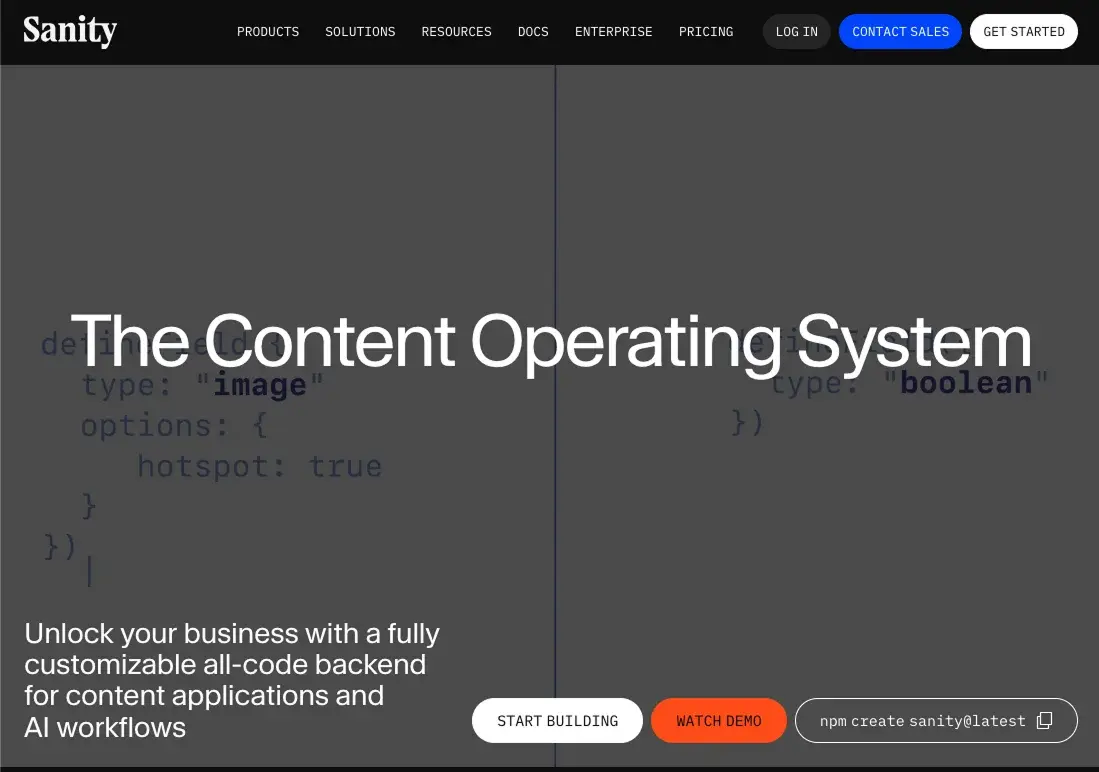
Sanity is where content editors and developers both leave happy. The editing experience is genuinely pleasant—think Google Docs-level collaboration but for structured content. Real-time updates mean your editorial team can work together without stepping on each other's toes.
The catch? It's cloud-only (mostly), and pricing scales with usage. That free tier is generous for getting started, but once you're in production with traffic, expect costs to climb. Still, if editor experience is your priority, Sanity delivers.
Notable Features
- Real-time collaboration that actually works smoothly
- Portable Text—their approach to rich, structured content
- Developer experience that doesn't make you want to quit
- Image processing and optimization included
What You Pay
Free to start. Growth plan starts at $15/month per user, scaling with API requests and bandwidth. Can get expensive at scale.
Right Choice When
Your content team needs to collaborate in real-time, you have budget for SaaS, and editor experience matters more than infrastructure control.
6. Contentful
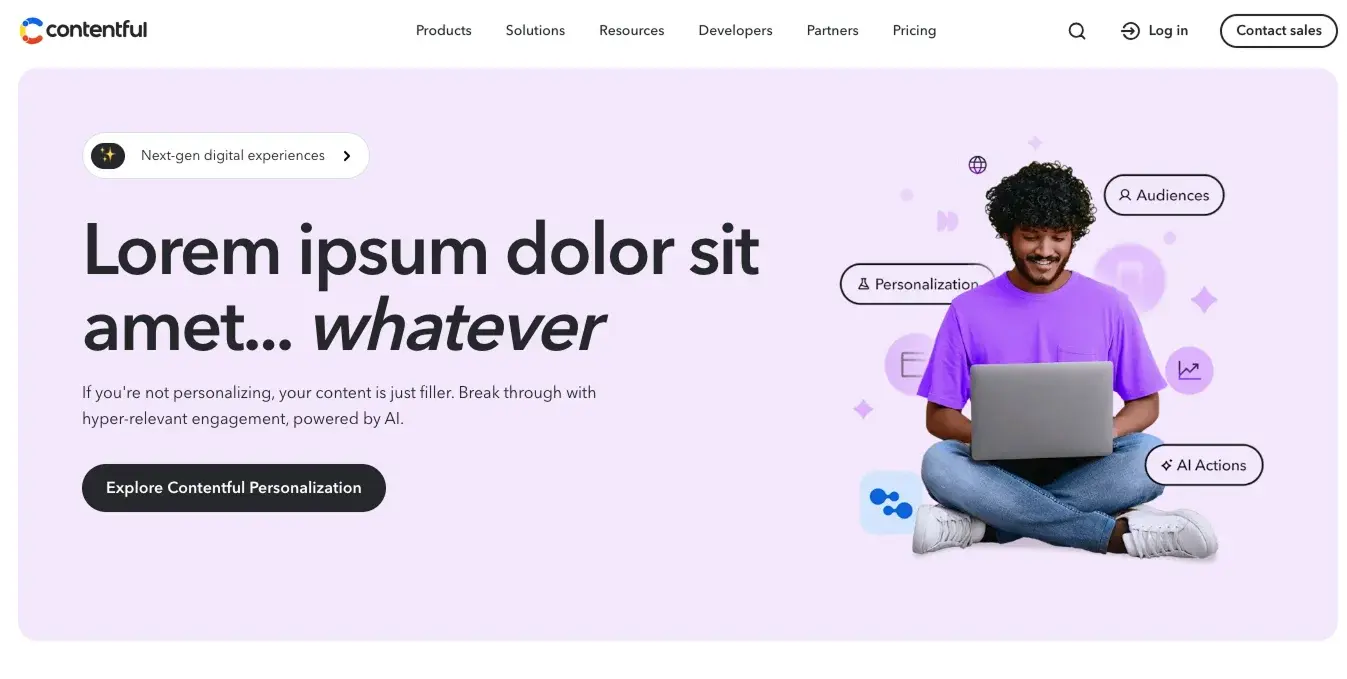
Contentful is the enterprise veteran. It's been around, it's battle-tested, and it has the case studies to prove it. Big companies use it because it simply works at scale, has extensive integrations, and comes with the support contracts enterprises need to feel comfortable.
The elephant in the room is cost. Starting at $300/month for paid plans, Contentful quickly becomes a significant line item. You're paying for maturity, reliability, and that "nobody gets fired for choosing Contentful" safety. But if you're a startup or agency, this pricing probably made you wince.
What You're Getting
- A decade of refinement—the rough edges are gone
- Integration ecosystem you'd expect from an enterprise tool
- Enterprise features like SSO, audit logs, advanced workflows
- Documentation and support that justify the price
Cost Reality
Free for tire-kicking. Actual production use starts at $300/month and goes up from there.
Makes Sense If
You're a large company with an enterprise budget, need vendor stability and support contracts, or have compliance requirements that rule out self-hosted solutions.
7. Ghost
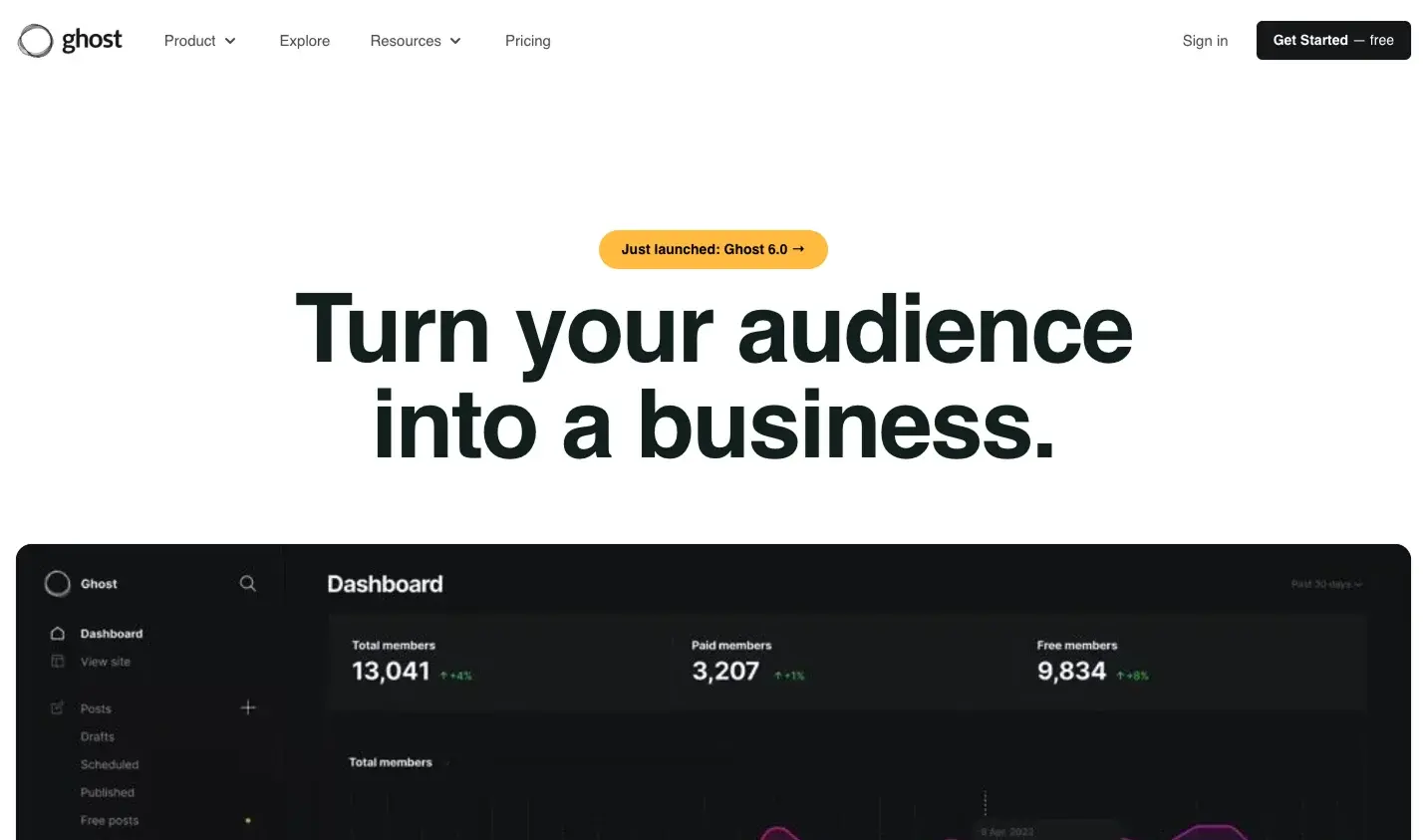
Ghost is an open-source CMS focused specifically on publishing. If you're building a blog, newsletter, or membership site, Ghost offers a streamlined experience.
Key Features
- Built-in membership and subscription features
- Excellent publishing experience
- SEO optimization built-in
- Newsletter integration
Pricing
Self-hosted (free). Managed hosting starts at $15/month.
Best For
Publishers, bloggers, and content creators focused on written content and newsletters.
8. Strapi Cloud
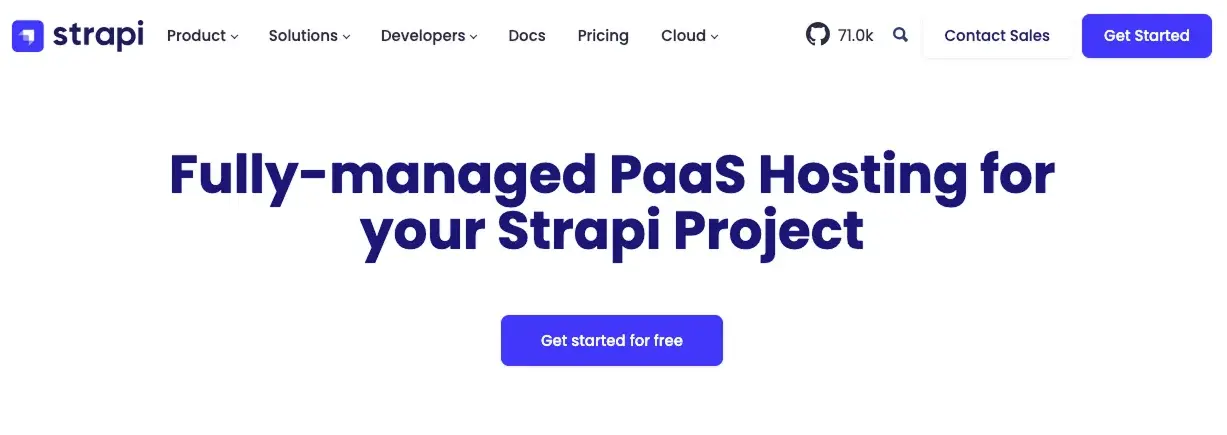
If you like Strapi but want managed hosting, Strapi Cloud is the official offering. You get the same CMS you know, but without managing servers yourself.
Key Features
- Same Strapi you're familiar with
- Managed hosting and updates
- Automatic backups
- Staging environments
Pricing
Starts at $18/month per project.
Best For
Teams who like Strapi but don't want to manage infrastructure. Note: it's still one project per plan.
9. Prismic
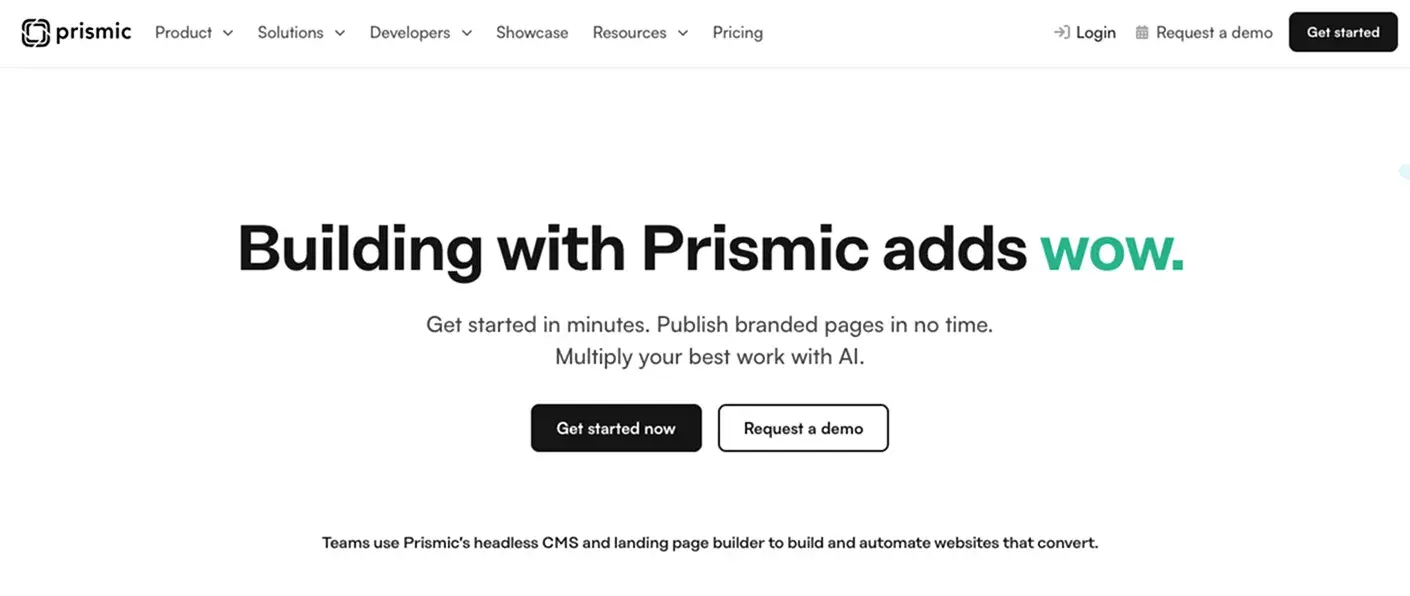
Prismic is a cloud-based headless CMS with a focus on the editing experience. It features "Slices" for component-based content modeling.
Key Features
- Component-based content with Slices
- Real-time preview
- Multi-language support
- CDN included
Pricing
Free for one user. Paid plans start at $15/month per repository.
Best For
Small to medium teams who want a balance between features and cost, with emphasis on content modeling.
10. Hygraph (formerly GraphCMS)
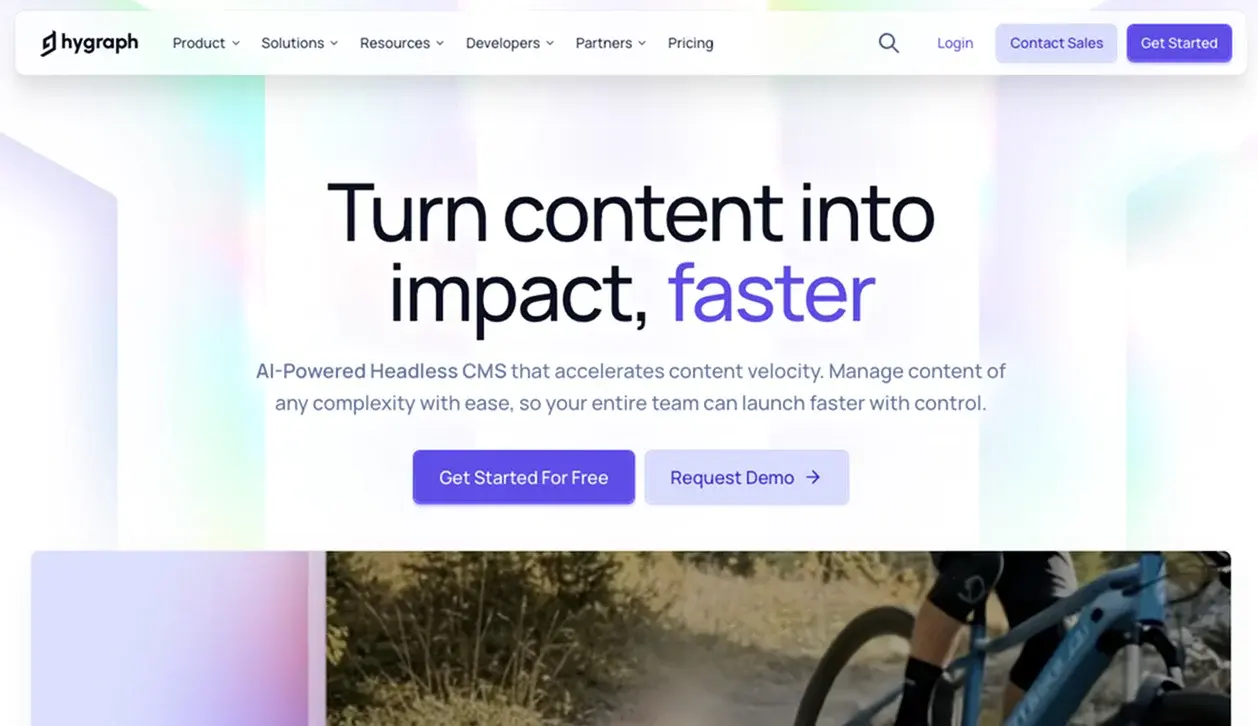
Hygraph is a GraphQL-native headless CMS. If your frontend already uses GraphQL, this could be a natural fit.
Key Features
- GraphQL-first architecture
- Content federation
- Localization built-in
- Asset transformations
Pricing
Free tier available. Paid plans start at $299/month.
Best For
Teams already invested in GraphQL who need advanced content federation features.
11. Statamic
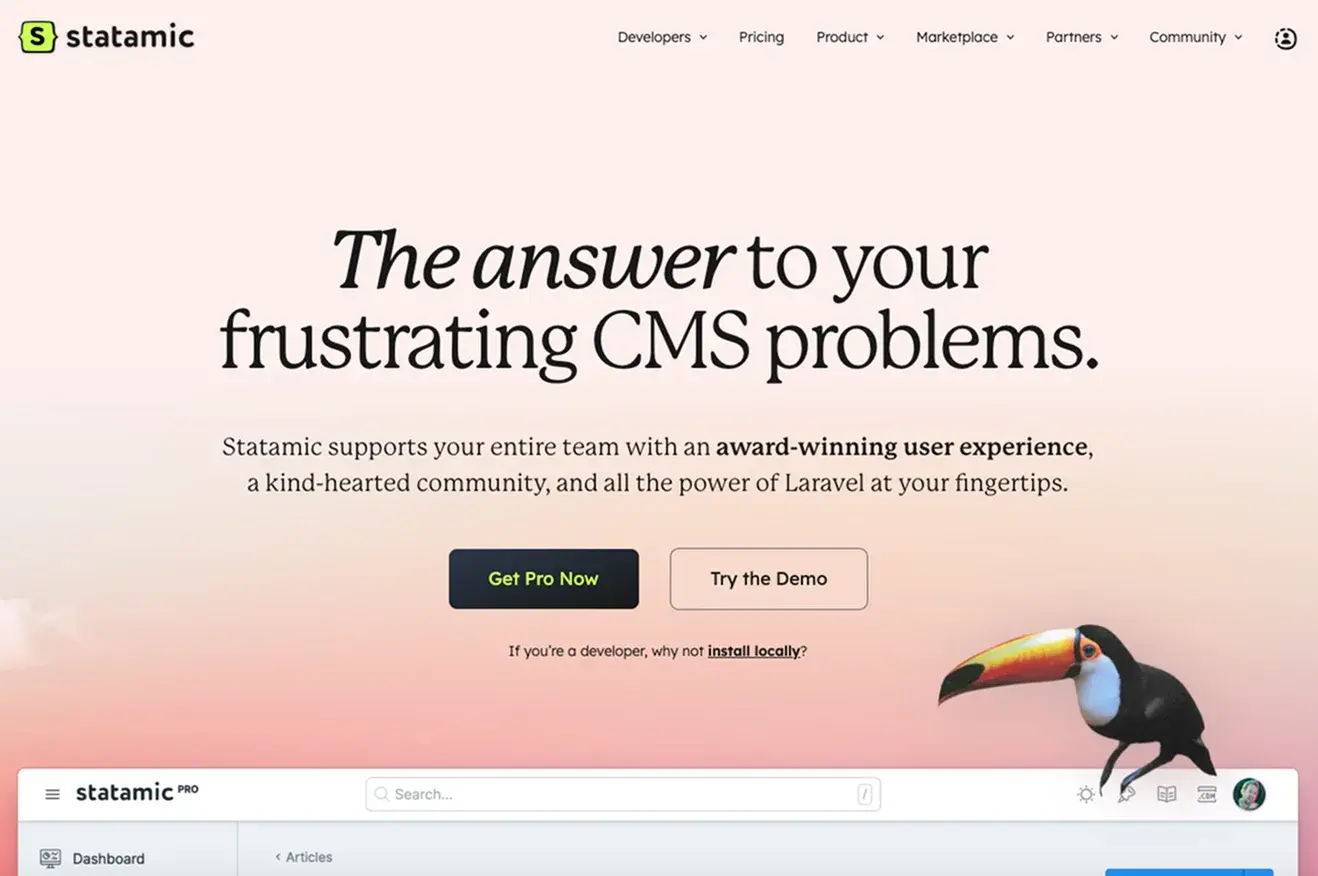
Statamic is a flat-file CMS built on Laravel. It can function as both a traditional CMS and a headless CMS, offering flexibility.
Key Features
- Flat-file or database options
- Built on Laravel
- Git-friendly content
- Beautiful control panel
Pricing
Free for solo sites. Pro starts at $275 per site (one-time).
Best For
Laravel developers who want a traditional CMS with headless capabilities, especially for smaller sites.
Conclusion: What's the Best Strapi Alternative?
There's no universal "best" CMS—it depends on your specific situation. Here's how to think about it:
If you're managing multiple client projects: ElmapiCMS's multi-project architecture will save you significant time and money. One installation, one maintenance routine, unlimited projects.
If you're a TypeScript purist building one complex app: Payload's type-safe approach might be worth the learning curve.
If you have an existing database: Directus can add a CMS layer without forcing migration.
If you have budget for SaaS and need real-time collaboration: Sanity or Contentful offer polished cloud experiences.
Our take? Most developers underestimate the operational cost of managing multiple CMS installations. If you're an agency or handling more than 2-3 projects, ElmapiCMS's architecture pays for itself quickly. The $74 one-time cost versus monthly per-project fees from other solutions is just math at that point.
Quick Comparison Table
| Feature | NomaCMS | ElmapiCMS | Payload | Directus | Sanity | Contentful | Strapi |
|---|---|---|---|---|---|---|---|
| Multi-Project | Yes (plans) | Yes | No | No | No | No | No |
| Pricing Model | From $15/mo | $74 one-time | Free (OSS) | Free (OSS) | $15+/mo | $300+/mo | Free (OSS) |
| Self-Hosted | No (cloud) | Yes | Yes | Yes | Mostly cloud | Cloud only | Yes |
| Technology | Managed cloud | Laravel/PHP | TypeScript | Node.js | Node.js | Cloud | Node.js |
| Setup Time | ~5 min | 5-10 min | 15-30 min | 20-40 min | 10-15 min | 5 min | 15-30 min |
| Memory Usage | N/A (cloud) | Low | Medium | Medium | N/A (cloud) | N/A (cloud) | High |
| Learning Curve | Low | Low | Medium-High | Medium | Low-Medium | Low | Medium |
| Real-time Collab | Strong editor workflows | No | No | Yes | Yes | Yes | No |
| GraphQL API | REST-first | No (REST only) | Yes | Yes | Yes | Yes | Yes |
| Best For | Managed AI-native No server ops | Agencies Multi-client mgmt | TypeScript Complex apps | Existing DB Enterprise | Content teams Collaboration | Enterprise Big budget | Node.js devs Standard use |
* Pricing accurate as of January 2026. Cloud-based solutions may have usage-based costs that vary.