This guide covers the best Directus alternatives available in 2026. Whether you find Directus too complex for your needs, want better multi-project support, or simply prefer a different approach to content management, there's likely a better fit.
Why Consider Directus Alternatives?
Directus excels at wrapping existing databases and providing maximum flexibility. But that flexibility has tradeoffs:
- Setup complexity - Directus requires more configuration upfront than purpose-built CMS platforms.
- Learning curve - The database-first approach takes time to understand, especially for content-focused teams.
- Overkill for simple projects - If you're building a straightforward content API, Directus's power might be unnecessary overhead.
- Multiple projects - Like most platforms, Directus requires separate installations per project.
- Node.js hosting - Requires Node.js infrastructure, which costs more than PHP alternatives.
Let's look at alternatives that address these concerns.
1. NomaCMS
NomaCMS is our managed, AI-native headless CMS. You get structured content, a REST API, a JavaScript SDK, and AI built in for writing, translation, and editing. Ship to Next.js, Nuxt, Astro, or other stacks without running your own CMS server. Connect Cursor, Claude Code, or other MCP-compatible tools using the Noma MCP server. Plans start at $15 per month after a 7-day free trial; see nomacms.com for tiers and limits.
Why consider NomaCMS
- Managed cloud with global CDN for assets and no server ops on your side
- AI assistant, inline field actions, and one-click entry translation
- REST API and SDK with predictable shapes for frontends and automation
- MCP server for AI editors (
npx -y @nomacms/mcp-server) - Project auth, webhooks, locales, and team workspaces on paid plans
Best for
Teams that want a hosted CMS with AI-first workflows and delivery infrastructure included, not only a self-hosted install.
2. ElmapiCMS

ElmapiCMS takes the opposite approach to Directus. Instead of wrapping existing databases, it provides a clean, opinionated structure designed specifically for headless content management. Built on Laravel and React, it prioritizes simplicity and multi-project efficiency.
The standout feature is genuine multi-project support. One ElmapiCMS installation handles unlimited projects, each with isolated content, API keys, and permissions. For agencies managing multiple clients, this eliminates the overhead of separate Directus instances.
Why Choose ElmapiCMS Over Directus
- Simpler setup - Running in under 10 minutes with Docker or Laravel Herd
- Multi-project architecture - One installation for all your clients
- Lower hosting costs - PHP/Laravel requires less memory than Node.js
- Purpose-built for content - No need to configure database introspection
- One-time pricing - $74 once versus ongoing infrastructure costs
Best For
Agencies managing multiple clients, developers who want quick setup without database configuration, teams who prefer Laravel/PHP over Node.js.
3. Strapi
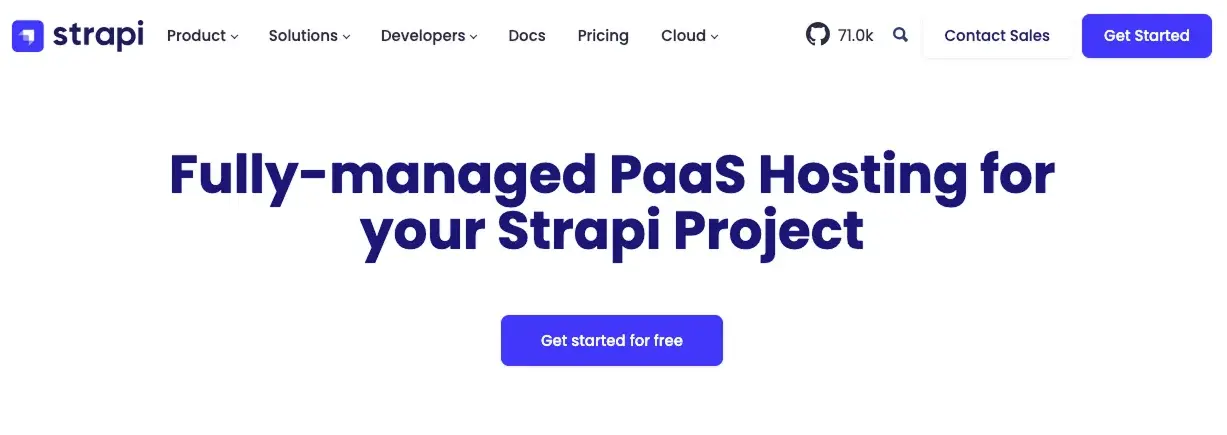
Strapi is the most popular open-source headless CMS. Unlike Directus's database-first approach, Strapi lets you define content types through a visual builder or code. It's more opinionated, which makes it easier to get started.
The plugin ecosystem is mature, and you'll find plenty of community resources. If you're coming from Directus and want to stay in the Node.js ecosystem but with less configuration, Strapi is a natural choice.
Key Features
- Content Type Builder - Visual interface for defining models
- Plugin marketplace - Extend functionality easily
- REST and GraphQL - Both API styles included
- Media library - Built-in asset management
- Internationalization - Multi-language support
Pricing
Free and open source. Strapi Cloud available for managed hosting.
Best For
Teams who want Node.js with a visual content builder, projects that don't need database wrapping.
4. Payload CMS

Payload is a TypeScript-native headless CMS with a code-first approach. If you appreciate Directus's developer focus but want stronger typing and a more modern codebase, Payload delivers.
Everything is defined in TypeScript config files, giving you version control over your entire CMS structure. The tradeoff is a steeper learning curve than visual builders.
Key Features
- TypeScript-native - Strong typing throughout
- Code-first config - Version control your CMS structure
- Local API - Direct database access for SSR
- GraphQL and REST - Both API styles available
- Access control - Field-level permissions
Pricing
Free and open source. Cloud hosting available.
Best For
TypeScript developers building complex single applications who want code-first configuration.
5. Sanity
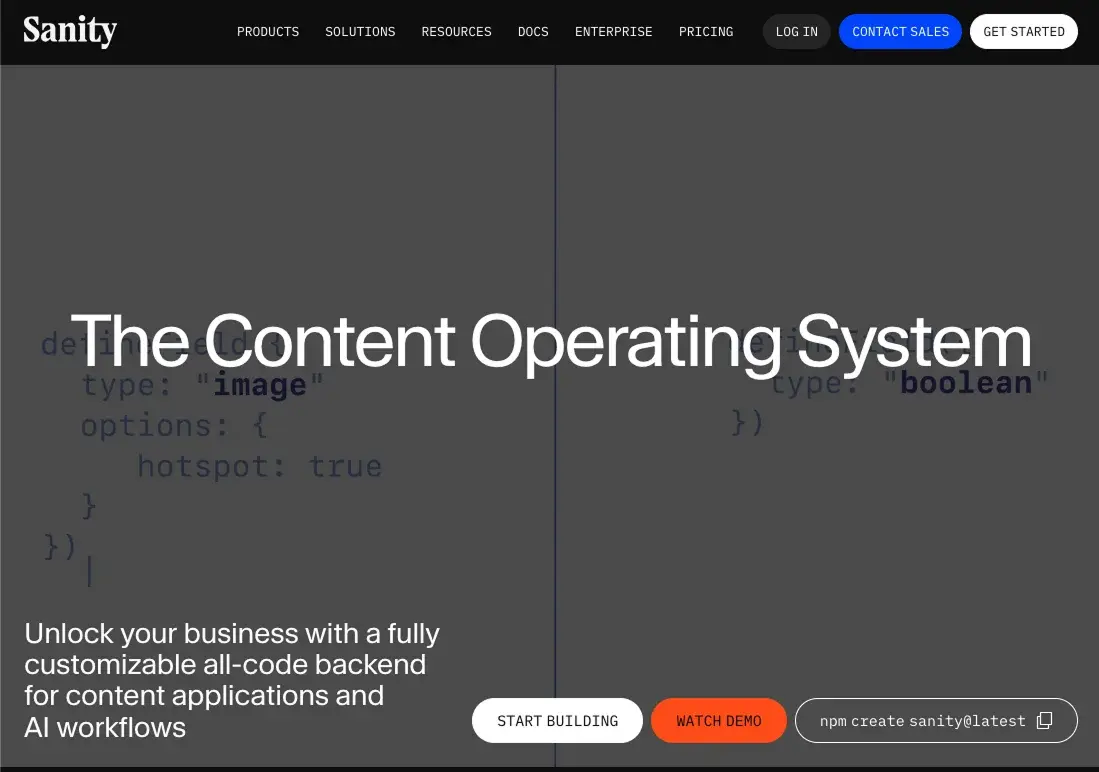
Sanity prioritizes the editing experience. Real-time collaboration, a polished interface, and structured content through Portable Text make it popular with content teams.
Unlike Directus's self-hosted focus, Sanity is primarily cloud-based. You trade infrastructure control for a smoother managed experience.
Key Features
- Real-time collaboration - Multiple editors working together
- Portable Text - Structured rich content
- Customizable Studio - React-based admin
- GROQ queries - Powerful content querying
- Image CDN - Built-in transformations
Pricing
Free tier available. Growth plan starts at $15/month per user.
Best For
Teams with non-technical content editors, projects needing real-time collaboration.
6. Contentful
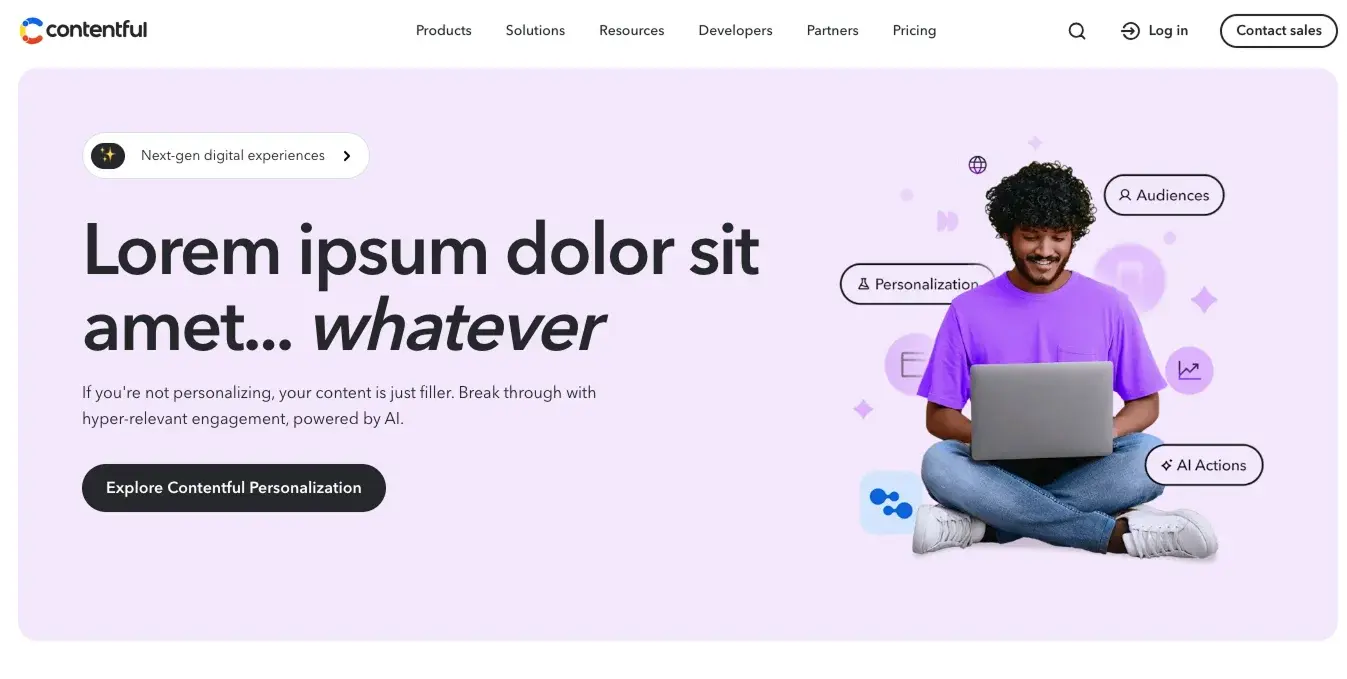
Contentful is the enterprise standard for headless CMS. It's mature, reliable, and comes with the support contracts and compliance certifications large organizations need.
The pricing reflects this positioning. Starting at $300/month, it's a significant investment. But for organizations with budget and compliance requirements, Contentful delivers stability.
Key Features
- Enterprise ready - SSO, audit logs, workflows
- Rich ecosystem - Extensive integrations
- Global CDN - Fast delivery worldwide
- Professional support - Dedicated help
- Mature platform - Years of refinement
Pricing
Free tier for testing. Paid plans start at $300/month.
Best For
Enterprise organizations with budget and compliance requirements.
7. Hygraph
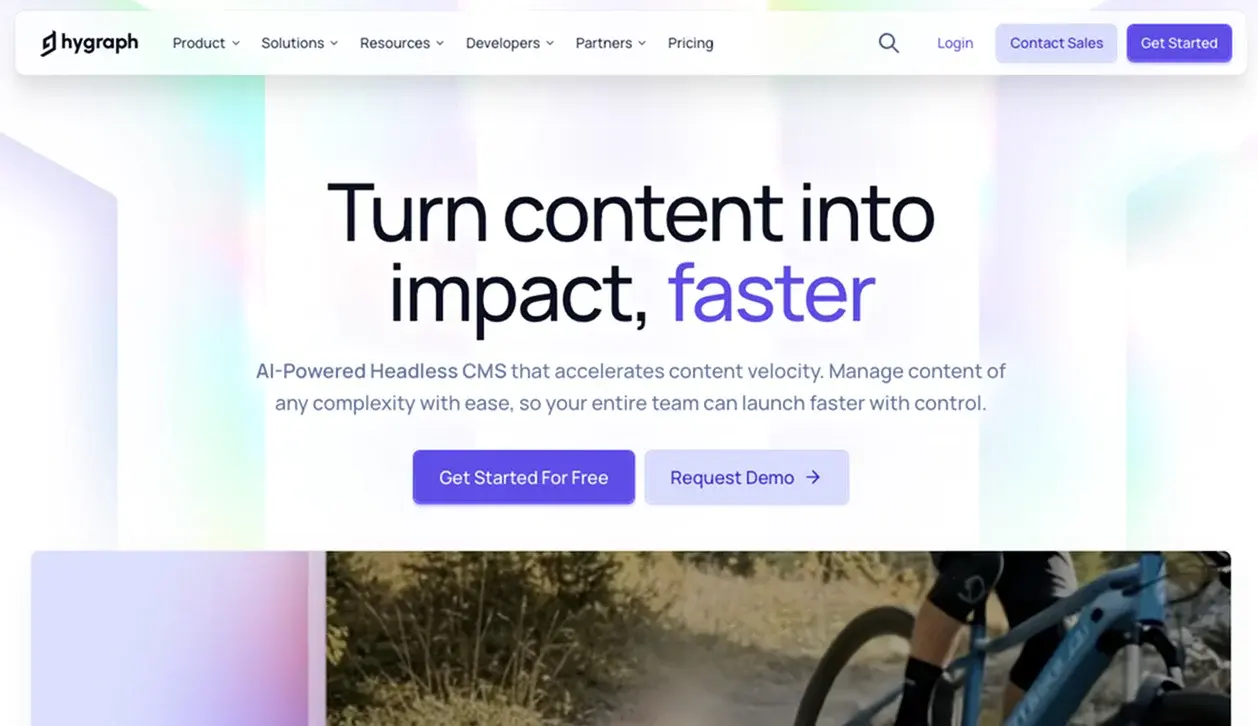
Hygraph is built GraphQL-first. If your frontend uses GraphQL, Hygraph eliminates the impedance mismatch you might feel with REST-first alternatives.
The content federation feature lets you combine data from multiple sources into a unified GraphQL API, similar to what you might achieve with Directus but in a cloud-hosted package.
Key Features
- GraphQL-native - Built for GraphQL
- Content federation - Combine multiple sources
- Localization - Multi-language support
- Webhooks - Event-driven integrations
- Asset pipeline - Image transformations
Pricing
Free tier available. Paid plans start at $299/month.
Best For
Teams using GraphQL throughout their stack, projects needing content federation.
8. Strapi Cloud
If you like Strapi but don't want to manage infrastructure, Strapi Cloud provides managed hosting. You get the same CMS with automatic updates, backups, and scaling handled for you.
Key Features
- Managed Strapi - No server management
- Automatic updates - Stay current effortlessly
- Backups - Data protection included
- Staging environments - Test before deploying
Pricing
Starts at $99/month per project.
Best For
Teams who want Strapi without infrastructure management.
9. Prismic
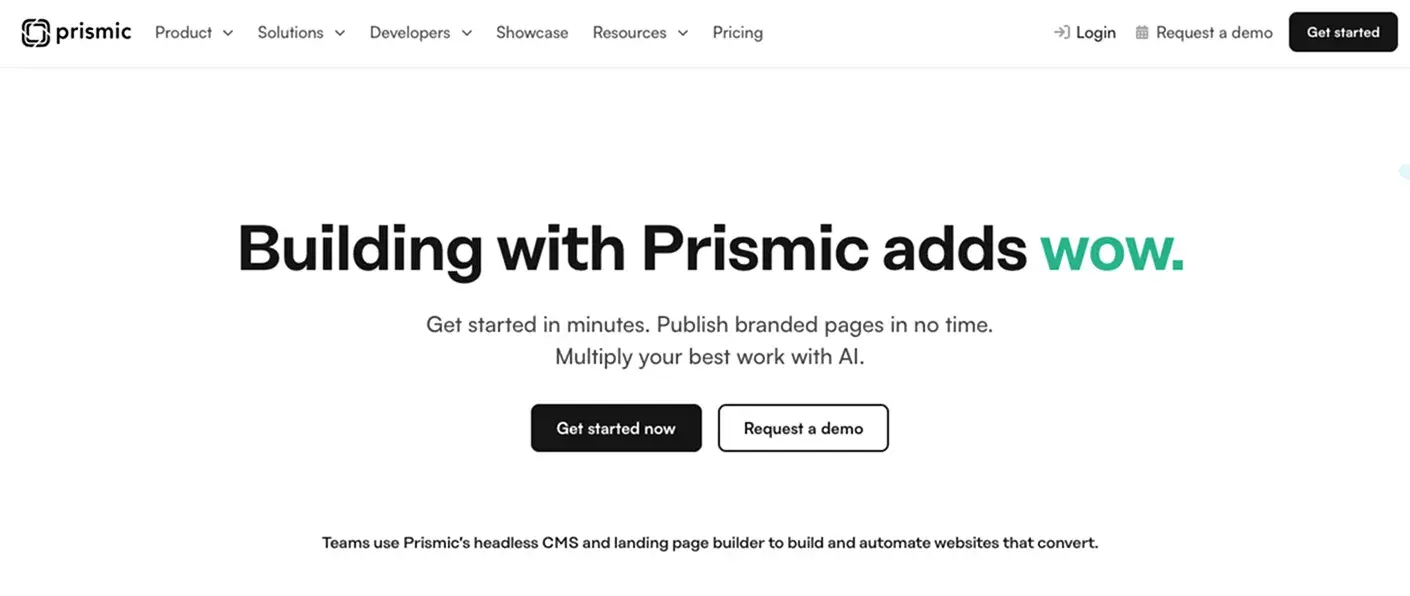
Prismic focuses on component-based content with its "Slices" system. Content editors build pages from predefined components, making it easy to maintain design consistency.
Key Features
- Slice Machine - Component-based content
- Real-time preview - See changes instantly
- Multi-language - Built-in localization
- CDN included - Fast global delivery
Pricing
Free for one user. Paid plans start at $15/month.
Best For
Teams building component-based websites with non-technical editors.
Quick Comparison Table
| Feature | NomaCMS | ElmapiCMS | Strapi | Payload | Sanity | Directus |
|---|---|---|---|---|---|---|
| Multi-Project | Yes (plans) | Yes | No | No | No | No |
| Pricing | From $15/mo | $74 one-time | Free (OSS) | Free (OSS) | $15+/mo | Free (OSS) |
| Technology | Managed cloud | Laravel/PHP | Node.js | TypeScript | Cloud | Node.js |
| Approach | AI-assisted SaaS | GUI-first | GUI or code | Code-first | Schema code | Database-first |
| Setup Time | ~5 min | 5-10 min | 15-30 min | 15-30 min | 10-15 min | 20-40 min |
| Self-Hosted | No (cloud) | Yes | Yes | Yes | Mostly cloud | Yes |
| Best For | Managed AI-native No server ops | Agencies Multi-client work | General use Node.js teams | TypeScript Complex apps | Content teams Collaboration | Existing DB Data wrapping |
Conclusion: Which Directus Alternative Is Right?
The best alternative depends on why you're moving away from Directus:
Need simpler setup and multi-project support? ElmapiCMS provides a straightforward headless CMS with one installation handling all your projects. $74 once, unlimited projects.
Want to stay in Node.js but simpler? Strapi offers a visual content builder without database introspection complexity.
Prefer TypeScript and code-first? Payload gives you strong typing and version-controlled configuration.
Content team needs the best experience? Sanity's real-time collaboration is excellent.
Enterprise requirements? Contentful has the maturity and support large organizations need.
For most teams frustrated with Directus's complexity or per-project limitations, ElmapiCMS offers the clearest path forward. Simple setup, multi-project architecture, and predictable one-time pricing make it practical for real-world work.